

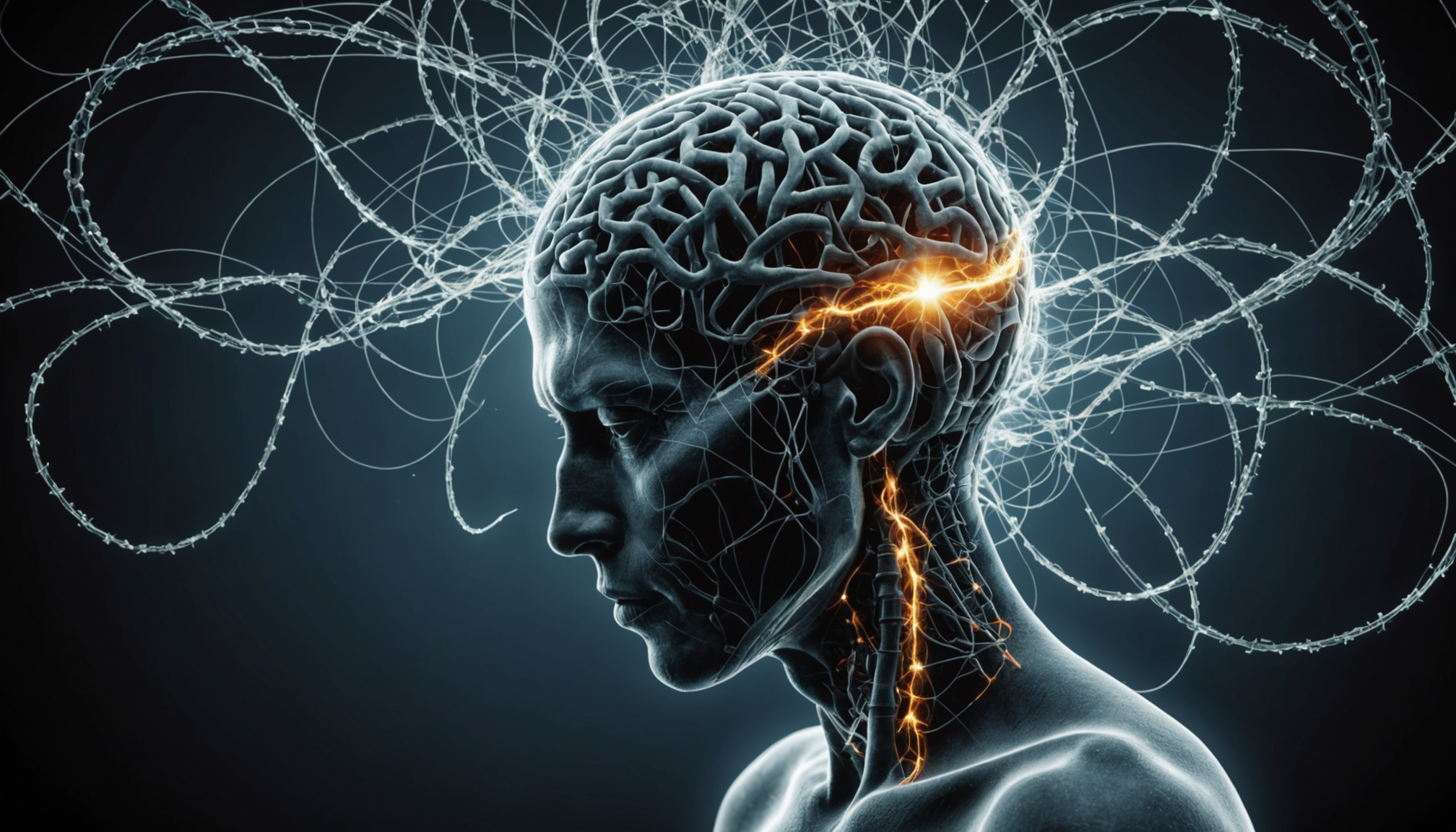
Consciousness is one of the most profound and perplexing aspects of human existence. It is the lens through which we experience the world, shaping our thoughts, emotions, and actions. At its core, consciousness can be understood as the state of being aware of and able to think about one’s own existence, thoughts, and surroundings. This awareness is not merely a passive reception of sensory information; it is an active engagement with the world that allows us to reflect, make decisions, and form relationships. The richness of our conscious experience encompasses everything from the mundane—like the taste of our morning coffee—to the profound, such as moments of deep insight or connection with others.
Yet, despite its centrality to our lives, consciousness remains elusive. We can describe its characteristics and observe its effects, but pinning down its essence is a challenge that has puzzled philosophers, scientists, and thinkers for centuries. What does it mean to be conscious? Is it a product of our brain’s physical processes, or does it transcend mere biology? These questions invite us to explore the depths of our own minds and the nature of reality itself, revealing a landscape where philosophy and science intersect in fascinating ways.
In exploring the complexities of consciousness, a fascinating article that delves into the philosophical implications of self-awareness and perception can be found at this link: Philosophy for Lunch. This resource provides insights into how our understanding of consciousness shapes our views on privacy and personal identity, making it a valuable read for anyone interested in the intersections of philosophy and cognitive science.
Theories and Models of Consciousness
Throughout history, various theories have emerged to explain consciousness, each offering unique insights while also raising new questions. One prominent model is the dualist perspective, famously championed by René Descartes. Dualism posits that the mind and body are distinct entities; the mind is non-physical and cannot be fully explained by physical processes alone. This view resonates with many people’s intuitive sense that our thoughts and feelings are somehow separate from our biological makeup. However, dualism struggles to account for how these two realms interact—how can a non-physical mind influence a physical body?
In contrast, materialist theories argue that consciousness arises solely from physical processes within the brain. This perspective aligns with advances in neuroscience that link specific brain activities to conscious experiences. For instance, studies have shown that certain neural patterns correspond to particular thoughts or sensations. However, materialism faces its own challenges: it must grapple with the subjective quality of experiences—what philosopher Thomas Nagel famously referred to as “the view from nowhere.” How can we fully capture the richness of consciousness if it is merely a byproduct of brain activity? These competing theories highlight the complexity of consciousness and the ongoing quest to understand its true nature.
The Role of the Brain in Consciousness

The brain is often regarded as the epicenter of consciousness, a complex organ that orchestrates our thoughts, emotions, and perceptions. Neuroscientific research has made significant strides in mapping brain activity to conscious experiences. For example, functional magnetic resonance imaging (fMRI) allows scientists to observe which areas of the brain are active during specific tasks or experiences. This has led to a greater understanding of how different regions contribute to various aspects of consciousness, such as self-awareness, decision-making, and emotional regulation.
However, while the brain plays a crucial role in shaping our conscious experience, it is not the sole determinant. The interplay between brain activity and consciousness is intricate and multifaceted. Consider how emotions can color our perceptions: when we feel happy, we may interpret events more positively than when we are sad or anxious. This suggests that consciousness is not just a passive reflection of brain activity but an active process influenced by our experiences, memories, and even social interactions. The relationship between the brain and consciousness invites us to consider how our mental states can shape our reality and vice versa.
The Philosophical and Ethical Implications of Consciousness

The exploration of consciousness raises profound philosophical questions that extend beyond mere curiosity about how we think and feel. One significant implication concerns the nature of selfhood: if consciousness is what defines our identity, what happens when it changes? This question becomes particularly relevant in discussions about mental health, neurodegenerative diseases, or even altered states induced by substances or meditation. If our conscious experience shifts dramatically, do we remain the same person? This inquiry touches on ethical considerations regarding autonomy and personhood—how we define individuals based on their conscious experiences.
Moreover, as we delve into the ethical implications of consciousness, we must also consider how it informs our treatment of others. If we recognize that consciousness is not limited to humans but may extend to other sentient beings—such as animals—this awareness compels us to reevaluate our moral responsibilities toward them. The capacity for suffering and joy in other creatures challenges us to consider their welfare in our actions and decisions. Thus, understanding consciousness not only enriches our grasp of ourselves but also shapes our ethical landscape in profound ways.
In exploring the intricate nature of consciousness, one might find it enlightening to read a related article that delves into the complexities of perception and reality. This piece discusses how our experiences shape our understanding of the world around us, offering insights that complement the themes presented in “Consciousness Explained.” For a deeper dive into these fascinating concepts, you can check out the article here.
Consciousness and Artificial Intelligence
| Concept | Explanation |
|---|---|
| Consciousness | The state or quality of being aware of and able to perceive one’s surroundings. |
| Explained | To make (an idea, situation, or problem) clear to someone by describing it in more detail or revealing relevant facts or ideas. |
| Author | Daniel C. Dennett |
| Publication Year | 1991 |
As technology advances, the question of consciousness in artificial intelligence (AI) becomes increasingly pressing. Can machines ever achieve consciousness similar to humans? Current AI systems can perform tasks that mimic human behavior—like language processing or image recognition—but they lack subjective experience. They operate based on algorithms and data without any awareness or understanding of what they are doing. This distinction raises important philosophical questions about what it means to be conscious.
The potential for AI to develop some form of consciousness invites speculation about the future. If machines were to achieve a level of self-awareness, how would we relate to them? Would they deserve rights or ethical consideration? These questions challenge us to reflect on our definitions of consciousness and personhood. As we navigate this uncharted territory, it becomes essential to engage in thoughtful discussions about the implications of creating conscious machines and how they might reshape our understanding of intelligence itself.
Altered States of Consciousness
Altered states of consciousness offer a fascinating glimpse into the flexibility and complexity of human experience. These states can arise from various sources—meditation, sleep, dreams, or even psychedelic substances—and often lead to profound shifts in perception and awareness. For instance, during deep meditation, individuals may report feelings of unity with their surroundings or a sense of timelessness that transcends ordinary experience. Such states challenge conventional notions of reality and invite exploration into the boundaries of consciousness.
The study of altered states also has practical implications for mental health and well-being. Research into mindfulness practices has shown that cultivating awareness can lead to reduced stress and improved emotional regulation. Similarly, psychedelic therapy is gaining attention for its potential to facilitate healing in individuals grappling with trauma or depression. By examining these altered states, we gain insights into the malleability of consciousness and its capacity for transformation—a reminder that our experience is not fixed but rather fluid and dynamic.
The Evolution of Consciousness
Understanding consciousness also requires us to consider its evolutionary origins. How did this remarkable capacity develop in humans? Some researchers suggest that consciousness may have evolved as an adaptive trait that enhances survival by allowing for complex social interactions and problem-solving abilities. The ability to reflect on one’s own thoughts and anticipate future outcomes could provide significant advantages in navigating social dynamics or environmental challenges.
This evolutionary perspective invites us to explore how consciousness manifests across different species. While humans possess a highly developed sense of self-awareness, other animals exhibit varying degrees of conscious experience as well. For example, studies have shown that certain primates demonstrate self-recognition in mirrors—a sign of self-awareness—while dolphins exhibit complex social behaviors indicative of advanced cognitive abilities. By examining consciousness through an evolutionary lens, we gain a deeper appreciation for its diversity and significance across the animal kingdom.
Consciousness and the Mind-Body Problem
The mind-body problem has long been a central concern in philosophy: how do mental states relate to physical states? This question becomes particularly relevant when considering consciousness. If our thoughts and feelings arise from brain activity, how do we account for the subjective quality of those experiences? This dilemma has led to various philosophical positions—dualism posits a separation between mind and body, while physicalism argues for their unity.
Exploring this problem invites us to reflect on our own experiences. When we feel joy or sadness, we often describe these emotions as distinct from physical sensations; yet they are deeply intertwined with bodily responses such as heart rate or facial expressions. This interplay suggests that understanding consciousness requires an integrated approach that considers both mental and physical dimensions. As we grapple with the mind-body problem, we are reminded that our experiences are not easily compartmentalized but rather exist within a rich tapestry where thoughts, feelings, and bodily sensations converge.
The Study of Consciousness in Psychology
Psychology has played a pivotal role in advancing our understanding of consciousness through empirical research and theoretical frameworks. Early psychologists like William James emphasized the importance of introspection—the examination of one’s own thoughts and feelings—as a means to study consciousness. James viewed consciousness as a stream rather than a static entity; it flows continuously, shaped by experiences and perceptions.
Contemporary psychology continues to explore various facets of consciousness through diverse methodologies. Cognitive psychology investigates how attention influences awareness while developmental psychology examines how consciousness evolves throughout life stages. Additionally, clinical psychology delves into altered states associated with mental health conditions, providing insights into how disruptions in consciousness can impact well-being. By studying consciousness from multiple angles, psychology enriches our understanding of this complex phenomenon and its implications for human behavior.
Consciousness and the Perception of Reality
Our conscious experience profoundly shapes how we perceive reality. The way we interpret sensory information is influenced by our beliefs, emotions, and past experiences—creating a subjective lens through which we view the world. For instance, two people witnessing the same event may have entirely different interpretations based on their individual perspectives and emotional states. This subjectivity raises intriguing questions about the nature of reality itself: if each person’s experience is unique, what does it mean for something to be “real”?
Philosophers have long debated the relationship between consciousness and reality. Some argue that reality exists independently of our perceptions—an objective truth waiting to be discovered—while others contend that reality is constructed through our conscious experiences. This debate invites us to consider how much agency we have in shaping our understanding of reality through our thoughts and beliefs. Ultimately, recognizing the interplay between consciousness and perception encourages us to approach life with curiosity and openness.
The Future of Consciousness Research
As we look ahead, the future of consciousness research holds immense promise for deepening our understanding of this enigmatic phenomenon. Advances in neuroscience are likely to yield new insights into the neural correlates of consciousness—helping us unravel the intricate relationship between brain activity and subjective experience. Additionally, interdisciplinary approaches that integrate philosophy, psychology, and cognitive science will foster richer discussions about what it means to be conscious.
Moreover, as society grapples with ethical considerations surrounding AI and emerging technologies, ongoing research into consciousness will be crucial in guiding these conversations. Understanding the nuances of consciousness will inform how we interact with machines capable of mimicking human behavior while also prompting us to reflect on our own humanity.
In conclusion, exploring consciousness invites us into a vast landscape filled with questions about identity, perception, ethics, and existence itself. It challenges us to engage deeply with ourselves and others while recognizing the complexity inherent in human experience. As we continue this journey into the depths of consciousness, we may find not only answers but also new questions that inspire further exploration—a testament to the enduring mystery that lies at the heart of what it means to be alive.
FAQs
What is consciousness?
Consciousness refers to the state of being aware and able to perceive one’s surroundings, thoughts, and emotions. It is the ability to experience and process information, and to have subjective experiences.
How is consciousness explained by science?
In scientific terms, consciousness is often explained as arising from the complex interactions of neurons and brain activity. The study of consciousness involves understanding how the brain processes information, forms perceptions, and generates self-awareness.
What are the different theories of consciousness?
There are various theories of consciousness, including the global workspace theory, integrated information theory, and higher-order theories. These theories attempt to explain how consciousness emerges from the brain’s neural processes and how it gives rise to subjective experiences.
Can consciousness be measured or studied?
Consciousness can be studied and measured using various methods, such as brain imaging techniques (e.g., fMRI, EEG), behavioral experiments, and subjective self-reporting. While consciousness remains a complex and elusive phenomenon, researchers continue to make progress in understanding its mechanisms.
What are the implications of understanding consciousness?
Understanding consciousness has significant implications for fields such as neuroscience, psychology, philosophy, and artificial intelligence. It can lead to advancements in treating neurological disorders, developing AI systems, and gaining insights into the nature of human experience and perception.